
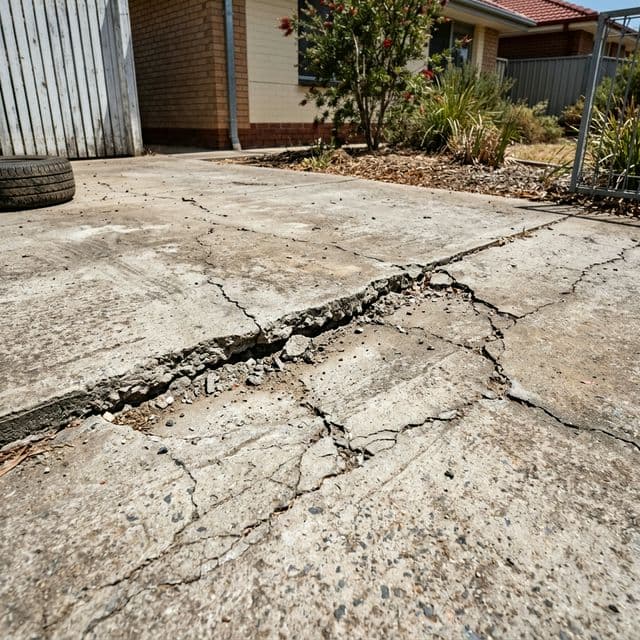
Common Concrete Cracks in Australian Homes: Causes, Prevention & Repair
Cracking remains one of the most frequent issues reported with concrete surfaces in Australia - especially driveways, paths and garage slabs.
Why Concrete Cracks in Australia
- Plastic shrinkage - rapid moisture loss during hot, windy curing conditions
- Drying shrinkage - normal contraction as concrete cures over weeks/months
- Reactive soil movement - very common in clay-rich areas (VIC, SA, parts of NSW & QLD)
- Thermal expansion/contraction - extreme day-night temperature swings
- Poor joint placement or no control joints at all
- Overloading or inadequate sub-base preparation
Prevention - Best Practices
- Cut control joints at 4-6 m intervals (or max 25-30 × slab thickness)
- Use proper curing methods - wet hessian, curing compounds, or ponding for at least 7 days
- Maintain correct water-cement ratio (never add water on site)
- Install vapour barriers and compact sub-base to 95% modified Proctor
- Consider polypropylene fibres or steel mesh in reactive soil zones
Repair Options by Crack Type
- Hairline cracks (<0.3 mm): usually cosmetic - apply penetrating sealer
- Narrow structural cracks (0.3-1 mm): low-viscosity epoxy injection
- Wide cracks (>1 mm): polyurethane foam crack filler or polymer-modified mortar
- Sunken/heaved slabs: polyjacking (foam injection) or mudjacking
Early action prevents water ingress, further movement and expensive full replacement.
Contact us for a no-obligation crack assessment in your area.
Published: January 15, 2026 | 6 min read